
Laser Hair Removal for Ingrown Hairs and Razor Bumps

Ingrown hairs, razor bumps, and irritation can turn a simple shaving routine into a recurring skin problem. When the same areas become red, tender, or bumpy after shaving, changing razors or shaving products may not always be enough to break the cycle. Laser hair removal for ingrown hairs may help by reducing the amount of hair that grows in the treated area, which can also reduce how often you need to shave. If shaving-related bumps keep coming back, professional laser hair removal in North Vancouver may be worth considering as part of a longer-term approach to hair reduction.
Why Do Ingrown Hairs and Razor Bumps Keep Coming Back?
An ingrown hair develops when a hair grows back into or underneath the skin instead of growing normally outward. This can lead to redness, tenderness, itching, or a visible bump around the follicle.
Razor bumps are closely related. After a close shave, a cut hair can sometimes curve back toward the skin or become trapped as it grows. The skin may then react with inflammation around the follicle.
For people who shave frequently, this can create a frustrating cycle: shave, develop irritation or bumps, wait for the skin to settle, then shave again and trigger the same problem.
People with coarse or curly hair may be particularly prone to ingrown hairs because the hair is more likely to curve back toward the skin as it grows. However, ingrown hairs and shaving irritation can affect many different hair and skin types.
Ingrown Hair, Razor Bump, or Shaving Irritation?
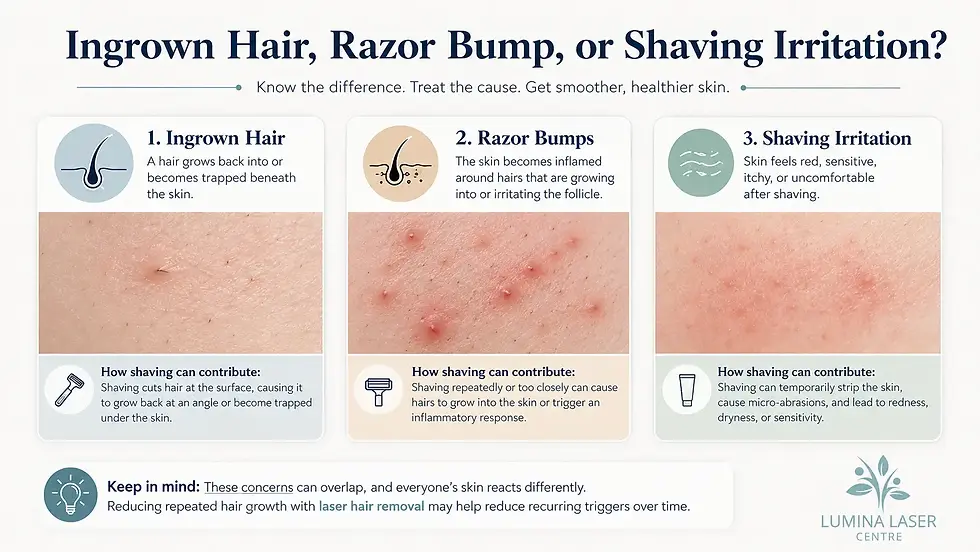
These concerns can overlap, which is why simply treating the visible bump may not always address the recurring trigger.
Can Laser Hair Removal Help With Ingrown Hairs?
Laser hair removal for ingrown hairs works differently from treatments that focus only on a bump after it appears.
Laser hair removal targets pigmented hair within the follicle to reduce future hair growth over time. As the amount and density of hair in the treated area decrease, there may be fewer hairs available to curl back into the skin or become trapped beneath the surface. This means laser hair removal may help reduce recurring ingrown hairs, particularly when they are closely connected to shaving or repeated hair removal.
It is important to keep expectations realistic, though. Laser hair removal should not be described as a guaranteed cure for every ingrown hair. Individual results can vary depending on hair characteristics, skin type, treatment area, hormonal factors, and how your skin responds.
How Laser Hair Removal May Help Reduce Razor Bumps and Shaving Irritation
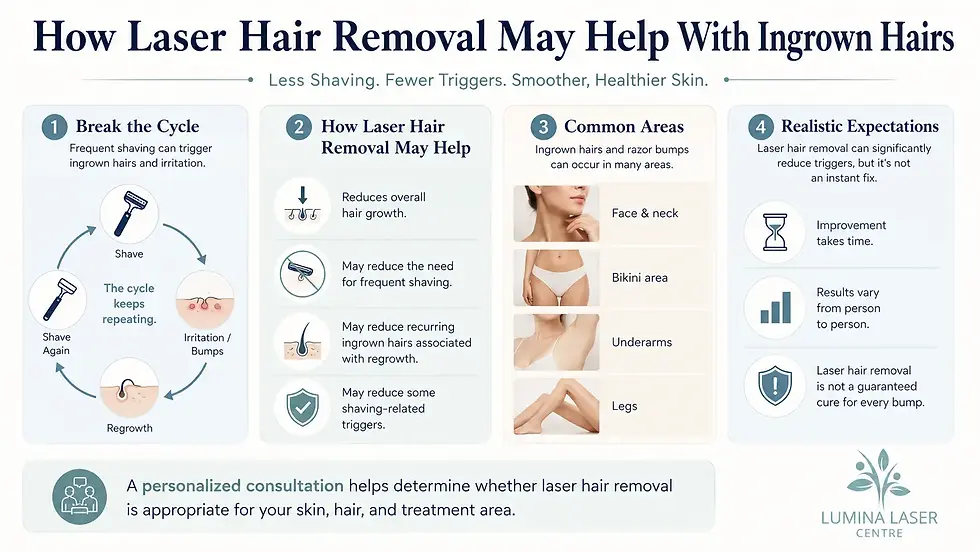
If razor bumps appear every time you shave, the shaving itself may be part of the problem.
Reducing hair growth can also reduce the need for frequent shaving. For some people, that may mean less repeated friction and fewer opportunities for freshly cut hairs to grow back into the skin.
Laser hair removal may help by:
Reducing overall hair growth in the treated area
Reducing the frequency of shaving needed over time
Helping reduce recurring ingrown hairs associated with regrowth
Reducing some shaving-related triggers that contribute to razor bumps
Making unwanted hair easier to manage between treatments
The goal is not to promise that laser treatment will eliminate every bump or every episode of irritation. Instead, it addresses the hair-growth cycle that may be contributing to the problem.
Who May Consider Laser Hair Removal for Recurring Ingrown Hairs?

Laser hair removal may be worth considering if you regularly experience ingrown hairs or razor bumps in areas where you shave.
This may include people who:
develop bumps after almost every shave
regularly deal with ingrown hairs in the same areas
experience ongoing shaving irritation
have coarse or curly hair that tends to grow back into the skin
want to reduce how often they need to shave
are looking for a longer-term hair-reduction option rather than repeatedly managing regrowth
A consultation is important because not every bump is necessarily an ingrown hair. Acne, folliculitis, skin irritation, and other conditions can sometimes look similar.
If an area is unusually painful, infected, swollen, or changing significantly, it should be assessed appropriately rather than assumed to be a routine razor bump.
Where Are Ingrown Hairs and Razor Bumps Most Common?
Ingrown hairs can occur anywhere hair is removed, but some areas are particularly prone to repeated shaving, friction, and regrowth.
Common areas include:
Face and Neck
The beard and neck area can be especially prone to razor bumps because facial hair may be coarse and can grow in different directions. Frequent close shaving can make recurring bumps more difficult to manage.
Bikini Area
The bikini line is another common area for ingrown hairs because hair can be coarse and the skin is exposed to both hair removal and friction from clothing.
Underarms
Frequent shaving combined with friction and sensitive skin can contribute to irritation and ingrown hairs in the underarm area.
Legs
Ingrown hairs can also appear on the legs, particularly after close shaving or repeated hair removal.
Laser hair removal may be used on many of these areas, but the appropriate treatment approach depends on the individual's skin, hair, and treatment goals.
Is Laser Hair Removal an Ingrown Hair Treatment?
It can be part of an ingrown hair treatment strategy when recurring ingrown hairs are related to ongoing hair growth and shaving.
The important distinction is that laser hair removal focuses on reducing future hair growth. It is not a direct treatment for an infected follicle, an open lesion, or every form of skin inflammation.
If you already have an irritated bump, you may still need appropriate skin care or medical treatment depending on what is causing it. Laser hair removal is more relevant to the longer-term cycle by reducing the amount of hair that needs to grow back and be removed again.
What Should You Expect From Laser Hair Removal for Ingrown Hairs?
Improvement should be viewed as a process rather than an immediate fix.
Hair grows in different stages, and laser treatment is most effective when hairs are in an active growth phase. Because not every follicle is active at the same time, treatments are typically performed over a series of appropriately spaced sessions.
As hair growth decreases over time, some people may notice fewer recurring ingrown hairs or less need for frequent shaving. However, the degree of reduction and the time it takes to notice a difference will vary.
Existing razor bumps also do not necessarily disappear immediately after a laser session. The skin may need time to settle, and any active inflammation should be considered separately from the longer-term goal of reducing future hair growth.
Can Laser Hair Removal Help With Bumps After Shaving?

When bumps repeatedly appear after shaving, reducing the underlying hair growth may help reduce one of the factors contributing to that cycle.
This is why people searching for laser hair removal for bumps after shaving are often less interested in hair removal alone and more interested in avoiding the repeated irritation that comes with constant regrowth and shaving.
The key is to think of laser hair removal as a way to reduce the amount of hair that needs ongoing management, not as a guarantee that every skin concern will disappear.
A Personalized Approach Matters
Hair texture, skin type, treatment area, the severity of recurring irritation, and your treatment goals can all influence the right approach.
Lumina Laser Centre uses Soprano Titanium technology and personalizes laser hair removal treatments around individual skin and hair characteristics. A consultation also gives you an opportunity to discuss where your ingrown hairs or razor bumps occur and whether reducing hair growth may be appropriate for that area.
Conclusion
Laser hair removal for ingrown hairs may help reduce the recurring cycle of hair growth, shaving, and irritation by reducing the amount of hair that grows in the treated area. That can mean fewer opportunities for hairs to become trapped beneath the skin and, for some people, less frequent shaving and fewer razor bumps over time. Results vary, so the goal should be long-term hair reduction rather than a guaranteed cure for every bump. Lumina Laser Centre can help you explore an approach based on your skin, hair, treatment area, and goals.


Comments